|
||||||||||
How to be a good recreational paintball Refree
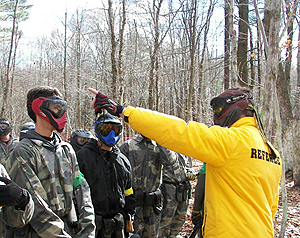
Just recently I played a walk on game at a local paintball field. Lately I have not been playing regular walk on games because I have been fortunate enough to have a number of big game and scenario events going on in the area but I was getting the urge to play and figured why not do a walk on game at a field that normally does not hold big game events. What I encountered there was perhaps some of the worst refereeing I have encountered since I have begun playing paintball. While I do not wish to run this paintball park’s name through the mud and taint what has been up until this incident, a good park I do wish to cover what makes a good referee for recreational paintball play. I want to make it clear that I am not going to go over tournament refereeing as the referees at that level of play have an entirely different job to do than your everyday recreational paintball referee. A referee referees, right? By definition, a referee is an official who is to enforce the rules of a particular activity to make sure each side “plays fair.” This is no different in paintball. However, at the recreational level a referee is more than just a rule enforcer. I would even go so far as to say enforcing the rules is his or her SECOND priority. Some of you look surprised. Who just said a referee is there to catch wipers and perform paint checks because you just know the guy you shot went behind his bunker to wipe off the hit and isn’t that what the referee is supposed to be watching for? Well while that is part of his job I am telling you that for referees at your local field that is not their most important task. The most important task for any recreational referee is player safety. End of story. Full stop. Do not pass Go. Every other task the referee has MUST come second to player safety. The less experienced the group the more time a referee must spend in reinforcing the safety policies of the park and paintball in general. Safety First!
So what are some of the things that a referee needs to watch out for and what can they do to keep players safe? Here are the basics:
Lead by example! I never thought about this aspect of refereeing until this past weekend. Over the course of the day, there were at least six different times when I saw players lifting their masks up while in unsafe areas. At first it baffled me because it was like it was a sudden epidemic. I cannot even remember how long it had been since I had seen even one beginner player lift their mask and here they were doing it in groups! Then I saw why it was happening.
The referees themselves were lifting their masks while still on the field! They would have their masks up telling the players not to lift their masks up! They would call game over and lift their masks! They would have their masks up while chronographing the players walking onto the field! No wonder there seems to be an epidemic, the referees were telling the players one thing but then showing them that lifting your mask really was not a big deal. It was so bad that one of my teammates later told me a story about how he saw a girl playing with her mask up! That’s right, she was actually in play, shooting and being shot at, with her mask up! When my teammate told her to put her mask down (yelling naturally because his mask was down and with the firefight going on it’s hard to be heard) she told him, “I don’t have to do what you say!” Finally he convinced her to put her mask down. Not a second after she did so two paintballs hit her square on the lens! Had my teammate not been so adamant about her safety she probably would have been seriously injured. As a referee there is more to your job than just telling players what they need to do to be safe. You have to show them how important it is that they follow these rules by following them yourself and enforcing them strongly. They will think overshooting is a big deal if you treat it as a big deal. They are more likely to be conscious of the mandatory surrender rule if you strictly enforce it. Above and beyond The basics above are the bare minimum that a referee needs to do to keep his players safe. However, there will be instances where something occurs on a field that the basics just do not cover and a good referee needs to be able to think for himself and do what is best to keep the players safe. For instance, while I was refereeing a big game a player got his masked knocked off because he had not tightened the strap properly. He was under fire when it came off and instinctively covered his head and dropped to the ground to protect his face and eyes. I quickly ran over to the player taking several hits while doing so and used my body to shield him while telling the other players to cease fire until we could get his mask back on and get him off the field. While I did not feel any of the shots would have injured him I felt it more important to do all I could to make sure the player would be safe. Sometimes a referee’s job is to put himself in the line of fire to make sure an eliminated player can safely exit an area. Getting shot is part of the game but getting bombarded in while trying to exit the field isn’t. Most times if you are dealing with more experienced players this is not a problem but when you have more novice players some may hesitate in moving out of cover after being hit not realizing that by doing so they are going to attract more fire since the opposing players are uncertain if they are out or not. It is up to the referee sometimes to get in there, get the other side to stop shooting, and get that player out of there safely. While most referees do not consider themselves maintenance men, they still should fix any problems on the field that may endanger their players’ safety if it can be done quickly and easily or notify the park management of safety items that cannot. For example, at the park I played at recently there is a road that runs between the playing fields. Cars use this road to access the parking lot and players use this road to get from the parking lot to the fields. By the field’s rules, this is a “safe” area. However, there were many places along the road where the netting that separated the fields from the road was torn. Some of the tears were large enough that I could have passed through them and I’m not exactly a small guy. Needless to say a paintball could easily pass through these tears and into the “Safe” zone. A good referee should take note of this and would tell his players to put on their safety goggles while in this “safe” zone in order to protect them and then notify the park of the problem. Maintaining order and control
Thus far we’ve addressed the major components of keeping players safe but there is one more aspect that the recreational referee must consider, enforcing the rules of the game. I know, you say this seems to be a given but believe it or not I have seen some referees that behave like glorified babysitters. They do just enough to make sure no one is seriously injured and blow whistles for the start and end of a game. That’s just not enough. Anyone that has played the game for some time knows that bad refereeing can ruin a paintball game. Referees that do not watch for wiping, do not enforce overshooting rules, and do not enforce surrender rules can make a day of paintball turn into a very frustrating and un-enjoyable experience. That, however, is not the worst part of it. Paintball, by its very nature, is an aggressive sport played by generally aggressive people. Mix in some unfair play and the frustration that comes with an inattentive referee and these aggressive players can, and often do, take matters into their own hands. Unfortunately I have seen a number of altercations on the paintball field that were close to becoming physical all because the referees were not doing their job. Players who had watched people wipe off their hits for most of the day started to hit people with multiple hits to make sure they got out. Players getting lit up in such a way who had not been wiping start getting mad because the referees are not calling the players who are not overshooting and decide to bunker the offender and overshoot them. A couple of players now are in the position where they are ignoring overshooting rules and playing angry leading up to them overshooting one another at very close range. Usually an exchange of harsh words using elevated voice levels (putting it in a PG sort of way…) follows and, if unchecked at that point, can lead to pushing, shoving, and eventually hitting.
A referee must not allow a game to get to this point. He does this by maintaining the respect of the players and control of the game. To get the players respect a referee must first be attentive. If a referee is properly looking after his players’ safety he should already BE attentive and aware of what is going on during play. Second, he must treat each player equally and with respect. A player may get a bit bent if a referee yells at them from across the field to put his mask down but the other players seeing that the referee is taking the infraction seriously means they will respect that rule and the referee enforcing it all that much more. Besides, the referee can always go over to that player after the game and explain just how important it is to keep those goggles down and he only yelled because of the immediate danger the player was putting himself (or herself) in by lifting their goggles at that moment. Next a referee has to be as fair as possible. When dealing with beginning players this is even more important as many times new players will “break” the rules just because they do not know any better and not realize they are doing something wrong. In these situations, the referee going in and warning the offending player is probably the best course unless the player has been warned already. Things like overshooting and bunkering are not instinctive to new players and a referee may choose to warn new players a couple of times before pulling them out of the game if they continue to ignore the rule. When it comes to more obvious rules such as wiping or physical contact a referee may choose to be less lenient and give only one warning or even pull the player for a first offense. It is important that no matter which path the referee decides to take he or she needs to make it as public as possible but within reason. Using an authoritive tone while speaking loud enough for others in the area to hear saying something like “Player, you’re out! Wiping will not be tolerated” or “Player, don’t hit someone with more than three balls again or I’ll call you out” will not only take care of the offending player but also demonstrate to other players in the area that you are paying attention and that such actions will be addressed. Again, if the players see the referee is enforcing the rules of the game to the best of his ability the game will not get out of control with players trying to enforce the rules in their own manner. But Ref, you’re wrong! Referees are not perfect and they are going to make mistakes. They will make bad calls and players will argue with them on occasion. With everything else, there is a wrong way and a right way to do things. One the field, the referee’s call is final. If a player wants to argue a call, the referee needs to FIRMLY explain to the player that he will need to take it up with him AFTER the game is over. Arguing a call while the game is still on endangers the remaining players because the referee’s attention is not on the game. Showing players that they are not going to bully you into changing a call while on the field will help the referee maintain control of the game and thus the players’ safety. By calmly and rationally discussing the call with the player after the game will show the players that the referee is not on some kind of power trip and really is doing his best to make the game safe, fun, and fair. At the same time, showing the players that kind of respect will, in turn, earn the referee the players’ respect as well. However, just because you will listen to them doesn’t always mean you are going to change your mind. If after listening to the player you think you made a mistake, apologize. If not, let the player know that this is the way you saw things, that you feel you made the right call, and leave it at that. You will not be able to please everyone. Conclusion Being a good paintball referee is not an easy thing to do and often it is a thankless job. Even so, it is important that the players are kept safe and that the rules are properly and fairly enforced. While you may never get the appreciation or thanks from the players you referee for, know that the difference between a good day of paintball and a bad day of paintball is often determined by the quality of the referee. Good luck, and remember, it is all about having fun. - Robotech
|